
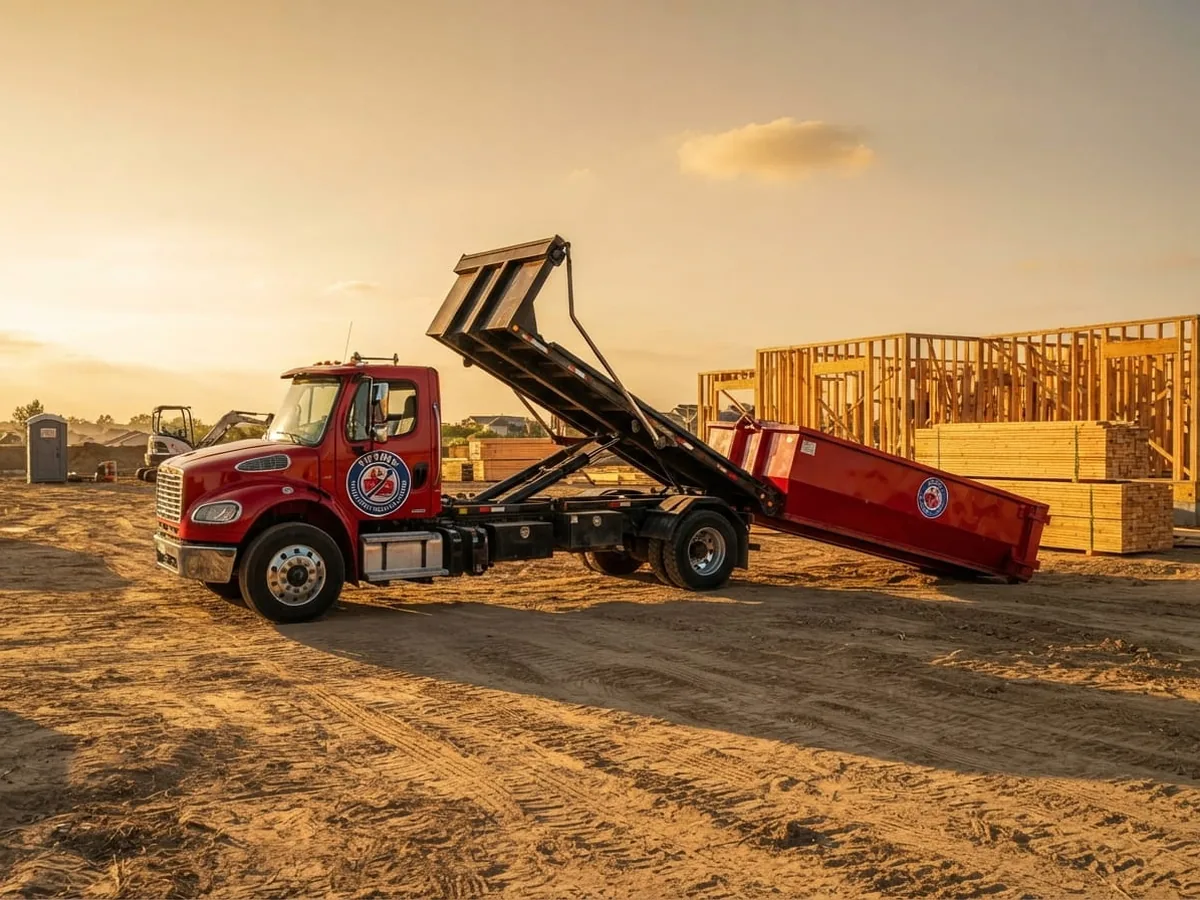
A Phase-by-Phase New Construction Dumpster Guide for Irvine
How Irvine-area builders size and time dumpsters across site prep, framing, roofing and interior finish, including California's gypsum disposal rule.
ReadWildfire Guide
A practical guide for Irvine-area homeowners clearing brush, dead vegetation and wildfire fuel from around the home: sizing a roll-off for light green debris, why it is hauled rather than burned, and where it ends up.

If you own a home anywhere along Irvine's hillside edges — Turtle Rock and Shady Canyon under the San Joaquin Hills, the Portola Springs and Orchard Hills villages climbing toward the Santa Ana Mountains, or any of the Great Park neighborhoods backing onto open space — you live in what firefighters call the wildland-urban interface. Much of the city sits between undeveloped hillsides to the northeast and open space to the southwest, and CAL FIRE classifies large tracts of that ground as a Very High Fire Hazard Severity Zone. When the Santa Ana winds come down out of the northeast each fall, that landscape is exactly the kind of fuel a wind-driven fire runs through. Keeping it clear is not optional, and the brush you cut has to go somewhere. This guide covers how to size a container for defensible-space and wildfire-fuel debris, why that material is hauled rather than burned here, and where it ends up.
California law requires homeowners to maintain 100 feet of defensible space around a home and its structures, and the Orange County Fire Authority, together with the City of Irvine's Open Space and Wildland Management program, enforces fuel-modification and vegetation-clearance rules across the city's interface zones. In practice that means thinning trees and brush, clearing dead and dry vegetation, pruning limbs back from roofs and chimneys, and keeping the first few feet around the house as lean as possible. It is not a one-time project — vegetation grows back every wet winter and dries out again by late summer, so most hillside households are clearing fuel on some schedule every year. The recent fire history around the city, from the 1993 Laguna fire that pushed toward Irvine to the 2020 Silverado fire northeast of the city and the 2024 Airport fire in the Santa Ana Mountains, is a reminder that the risk is real and seasonal.
The debris from a serious fuel-reduction job is bulky but light: cut brush and dead shrubs, tree limbs and prunings, dried grass and weeds, palm fronds, ivy and vine pulled off walls and fences, and the occasional small stump. It is the opposite of a concrete tear-out — it fills a container by volume long before it gets anywhere near a weight limit. That has two consequences. First, you want a container sized for volume, which usually means going a size up from what the raw tonnage would suggest. Second, green and woody debris is cleanest to handle when it is kept separate from construction trash, because clean green material can be routed to composting rather than landfill.
For a typical hillside lot's seasonal clearing, a 15 yard container handles a weekend of brush and prunings with room to spare. A larger property, a long-overdue clearing, or a job that also pulls out old landscaping often needs a 20 yard container, which is the most common choice for volume-heavy green loads. If you are only trimming back the first zone around the house, a 10 yard container is often enough. Because brush is so light, you rarely have to worry about tonnage on these loads — the limit you hit is the fill line, not the scale. When in doubt, describe the property and the scope on the phone and we will point you to the honest size rather than the biggest one.
In a lot of rural parts of the country, cleared brush gets piled and burned. That is not how it works in urban Orange County. Open burning of vegetation, construction debris and household waste is prohibited across the developed parts of the county under the South Coast Air Quality Management District and the Orange County Fire Authority — the air-quality rules and the fire rules point the same direction. There is no routine residential brush-burning allowance here the way there is in wetter, more rural regions. So defensible-space material is cut and hauled, not burned. A roll-off on the driveway is the straightforward way to do that: load it as you clear, and it leaves as one trip rather than a dozen runs to a transfer station in the back of a pickup.
Clean green and yard debris is composted rather than buried. OC Waste & Recycling runs the Bee Canyon Greenery at the Frank R. Bowerman Landfill site on Bee Canyon Access Road, right here in Irvine, which takes green material for composting. Mixed loads — brush combined with fencing, construction offcuts or general trash — go to the landfill itself, which is a commercial-hauler facility (no public dumping). Because we run as a commercial hauler, we can take either kind of load to the right place; keeping your green material clean of trash simply means more of it can be composted rather than landfilled, which also helps on any project that falls under California's CALGreen diversion rules.
Irvine's debris calendar is not only about fire. The winter atmospheric-river storms that roll through can bring down limbs, topple trees onto fences, and wash mud and plant debris off saturated hillsides. The same volume-sized container that handles a brush-clearing job handles storm cleanup, and the same rule applies: it is light, bulky material that fills by volume. If a storm has left you with a yard full of downed limbs, the sizing advice above still holds.
Tell us the property and the scope, and we will quote a flat rate with the disposal included and a rental window that matches how you actually plan to work — a weekend, or a couple of weeks of steady clearing. We set the container on boards so it does not mark the driveway, and in Irvine's HOA-governed villages we are mindful of placement and the association's architectural rules. When you are done, one call brings the truck back. For anything you are unsure about — whether a size fits, whether a material belongs in the green load or the mixed load — ask before you book. You can reach us any time at (949) 867-1538.
Talk to a real person
Call (949) 867-1538 and describe the job. Flat price, stated tonnage allowance, and a delivery window on the same call.
Mon–Sat 7:00am – 7:00pm
From this guide
No. Open burning of vegetation, construction debris and household waste is prohibited across developed Orange County under the South Coast Air Quality Management District and the Orange County Fire Authority. Defensible-space material is cut and hauled, not burned — a roll-off container is the straightforward way to clear it.
Because brush and green debris are light and bulky, you size by volume. A 15 yard container covers a typical weekend of hillside clearing; a larger property or an overdue job often needs a 20 yard. You rarely hit a weight limit on green loads — the fill line is what you reach first.
Clean green and yard debris is composted at the Bee Canyon Greenery at the Frank R. Bowerman Landfill site on Bee Canyon Access Road in Irvine. Mixed loads go to the landfill. Keeping green material clean of trash means more of it can be composted rather than landfilled.
Not on your own private property — a driveway or yard placement needs no permit. In Irvine's HOA-governed villages the association's placement and architectural rules may apply, so it is worth a quick check. A container on a public street would need a City of Irvine Public Works encroachment permit.
Yes. Downed limbs and storm-blown vegetation are the same light, bulky material as brush clearing, and the same volume-sized container works. Describe the job and we will point you to the right size.
Keep reading
How Irvine-area builders size and time dumpsters across site prep, framing, roofing and interior finish, including California's gypsum disposal rule.
ReadA practical checklist for sizing, placing and timing a dumpster around a Irvine re-roof, including real the Irvine area weather and permit considerations.
ReadA no-pressure guide for Irvine-area families clearing a home after a loss or a move, covering sizing, sorting, California's mattress rule, and permits.
Read
